Welcome to the site. This exists because i wanted a place to collect my thoughts and stuff I’ve made or found.

Category: English

it is what it says

  • People need to travel more

    If you have been on social media in the past few years you probably don’t agree with the title of this article. People seem to be travelling all the time, and people are flying around the globe more than ever.

    So why do I think people need to travel more? It came up when I was practicing therapy for students in my work. Most students (especially when either Christmas or summer deadlines come closer) are stressed about getting their diplomas, acing (or failing) that exam or how to land that job they should have next year. 


    Anxiety all around basically! What I found interesting in these conversations is that most people are preoccupied with the “target”, or to stay in the travel metaphor; “destination”, they’ve been chasing. It’s about getting that degree, not how to get there in any qualitative way. To get that degree, students sometimes say things like; “I’ll just throw some extra hours at it”, or “I’ll work harder than ever”, without actually thinking about what that actually behaviourally amounts to. 

    What steps does “working harder than ever” entail? Will you magically up that concentration you didn’t have or 8 hours a day last week for the next week? I’m not trying to be annoying when I mention these things, I’m trying to make the student see that there is a qualitative and quantitative way of looking at how you “travel” to “get there”. I would argue that focusing on, and acing all the small steps of climbing a mountain during a hike will most probably get you to that epic top eventually and not walking through the nights as well. 

    To use the hiking metaphor again, you’ll need to take water, food and also energy breaks (preferably at nice viewpoint spots) based on the distance of the hike that day. Just like learning in small bursts (pomodoro learning for example) will most probably sustain the concentration and give you a higher grade!  You will also need to take breaks from studying, touch some grass, look at the birds, take some nutrition and go for that water break.

    People go on multiple day hikes, but I would argue they are mostly pre-occupied where they are going for that day, and only at the end of the day start thinking about the day after. (provided they’ve made a total plan before starting to hike, which people should do for studying as well). Maybe if you want to ace that test, more attention should be taken on how the “route” of the day looks like. 

    Therefore I think people need to pay more attention to the actual “act” of travel in the broadness of life. If you open any social media (image) app, most people post “where they are”, and it is usually a destination, or a “mountain view”. People show themselves at the beach, at the top of that mountainous hike, or at dinner. They rarely show images of the toilet visit, or the boring outer city highway to get to that nature park!

    But since you need to take that boring road anyway, what do people do often? Pack snacks? turn on that epic road-trip playlist to make it more fun? I know I do. Why don’t we do something similar when we need to reach a “mountain view” when studying something? Make sure the desk is empty except for necessities. You don’t drive with your phone in your hand (I hope), so put that thing away also. Maybe turn on some low fi study vibes, pack those study snacks (not too high in sugar)! And plan out where you would like to “end up” on the “travel day”. Lets hope you get there step by step!

    What I also notice is a general kind of “loss” or emptiness whenever a goal is reached. When the student gets that grade, diploma or job euphoria surely exists for a while, but the inevitable “now what” will turn the corner sooner than later. Again, the “target mountain view” has become too holy. It never is a solution to all things (usually emotions you want to manage or change). Best to have the whole trip be something to look back on, and not only a highlight too much energy was invested in. Make it worth it.

    So to get back to that holiday metaphor; If you go on a holiday, what is the destination anyway when you know you will eventually be returning home? Of course the holiday destination is the destination when you start traveling, but I would argue that the destination is nothing more than a goalpost to “aim” your travel on and look back to, just like a test is a goalpost to check if your “travelling” or learning in this metaphor has been done well. 

    In therapy I usually recommend traveling like Jack Sparrow does from “Pirates of the Caribbean”. Jack has a compass that “points to whatever the holder wants the most at that moment”. It’s probably not a good idea to lead life on that premise alone, but what is nice about compasses is that they show a direction to go to (NW? SE!). This forces you to think about where you are now, where you want to be going to, and what’s in between those two points, plus how to get there!

    In short, targets, mountain views and goalposts are very important, yes. How else do you know where to go? I strongly believe that in this day and age though, they’ve become too big for your travelshoes and you need to start figuring out where to put your feet instead.
  • Human-centric robotics and crabs

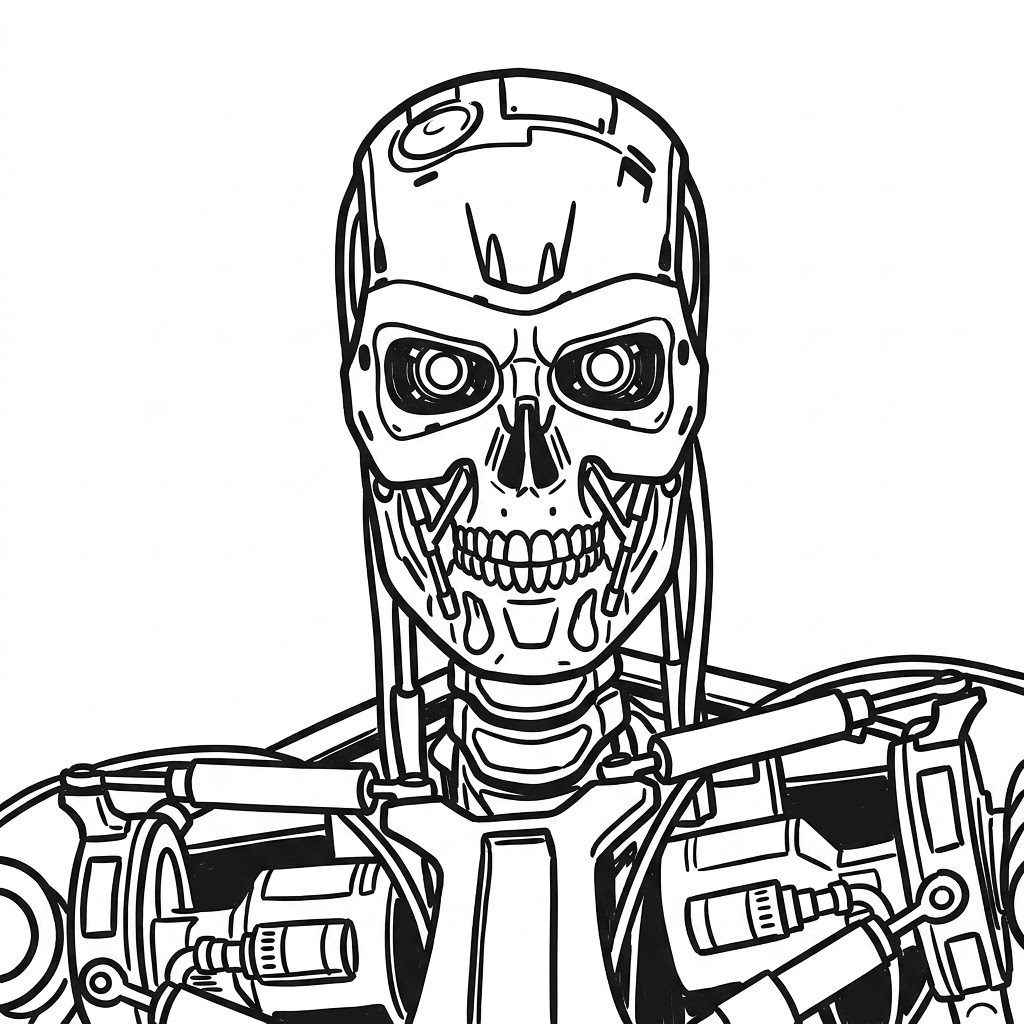
    Robotics have always fascinated me. Ever since I saw the Boston dynamics “dog” robots, the terminator movie, power rangers combining into vol-tron or the transformer movies, robots held a forever “cool” factor for me.

    Since the dawn of AI, robots have had a resurgence in the public view. This year Sony developed “ACE” for example. A new kind of “physical AI” (or Robot?) that could consistently beat humans at ping pong. (check it out here!). The big “new” thing of this event is the flexible, AI powered “autonomous” part. The robot uses AI to “think” (or react to the world autonomously) for itself to beat the other player. This is different from”older” robots, who were consistently designed to do certain objectives or movements very precisely under certain met conditions.

    With the coming of AI, Robots have become able to “improvise” on different situations from their original intended design objective. They can actively learn from observation, and are getting better over time.

    These abilities make some of the more doomsaying humans think our AI overlords will eventually develop a T-800 to conquer the world. Other AI doomsayers are maybe a bit more realistic by arguing that for example a rogue AI will execute their prime directive of ” improve the climate of earth”, a bit too well and alter micro climates so much that humans will be collateral damage.

    Or maybe AI will go the “skynet route! But if that happens, I don’t think they will be “T-800 (or human) shaped”.

    This “physical AI robot”, while scary, is a bit too “human” shaped for me. (this is on purpose of course, to activate the uncanny valley)

    I also think that the terminator movies, and our fear of a robotic overlord future is way too human-centric as an idea. Why would a robot choose a human form if you can just poison the fresh water supply shaped like a server box in a data center somewhere?

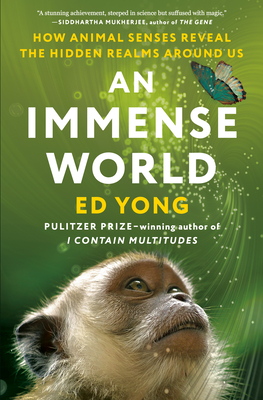
    This way of thinking started for me when I read two books last year. the first book was “An Immense World” by Ed Yong.

    .

    We encounter beetles that are drawn to fires, turtles that can track the Earth’s magnetic fields, fish that fill rivers with electrical messages, and humans that wield sonar like bats. We discover that a crocodile’s scaly face is as sensitive as a lover’s fingertips, that the eyes of a giant squid evolved to see sparkling whales, that plants thrum with the inaudible songs of courting bugs, and that even simple scallops have complex vision. We learn what bees see in flowers, what songbirds hear in their tunes, and what dogs smell on the street. We listen to stories of pivotal discoveries in the field, while looking ahead at the many mysteries which lie unsolved.

    In this book it is made clear (in a beautiful way of writing I might add, please go buy it) that the world we experience through our human senses is just a tiny sliver of the wealth of subjective experiences that exist outside of our species. It made me think that if true General AI “experience” will exist at all, it won’t view the world “as we do”. it will have it’s own “filter” of reality and for example will probably be able to “see” or “experience” a way broader spectrum of light than humans ever will be able to.

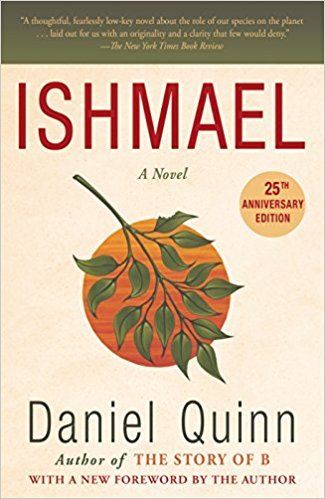
    The second book “Ishmael” by Daniel Quinn had a more story based philosophical approach to get me to the idea that humans are too entrenched in the “specialness” of humans, and the idea that the reality of the world adheres to only what humans think of it. We are too entrenched in thinking of ourselves as the center of the universe.

    The narrator of this extraordinary tale is a man in search for truth. He answers an ad in a local newspaper from a teacher looking for serious pupils, only to find himself alone in an abandoned office with a full-grown gorilla who is nibbling delicately on a slender branch. “You are the teacher?” he asks incredulously. “I am the teacher,” the gorilla replies. Ishmael is a creature of immense wisdom and he has a story to tell, one that no other human being has ever heard. It is a story that extends backward and forward over the lifespan of the earth from the birth of time to a future where there is still time save. Like all great teachers, Ishmael refuses to make the lesson easy; he demands the final illumination to come from within ourselves. Is it man’s destiny to rule the world? Or is it a higher destiny possible for him– one more wonderful than he has ever imagined?

    In the book the Gorilla Ishmael divides humans into Takers and Leavers

    The Leavers: Indigenous, tribal, and hunter-gatherer societies. Leavers believe that humans belong to the world, just like any other species, and they live in balance with the natural environment.

    The Takers: Members of modern, “civilized” societies (dating back to the Agricultural Revolution). Takers believe the world belongs to humans and was made for them to conquer and rule.

    The Takers are the main group of humans alive on the world at the moment. Nature is something to be conquered by intelligence (human intelligence). This Idea is also seen in the AI – Skynet revolution of the terminator movies. The first thing the AI does, is “conquer” the world. They are the new intelligence, and they should therefore “dominate” and not live in harmony.

    Interesting ideas I thought, but to circle back to the beginning, it also got me thinking on the arrogance of giving the t-800 a human shape. I think the Boston dynamics dog we mentioned before is a bit more scary than a T-800 when you strap a flamethrower to its back, because of the inhumanity of it and the way more flexible and quick way it can move about. Especially when you make these robots autonomous!

    I think that’s also what makes the new kind of warfare with autonomous drones so scary. Not necessarily the destructive power, but the “inhumanity” of the fact that a tiny flying, super fast device can decide for itself to blow something up, and maybe you with it. Lets hope they don’t have the same hallucination – error percentages as the average large language model.

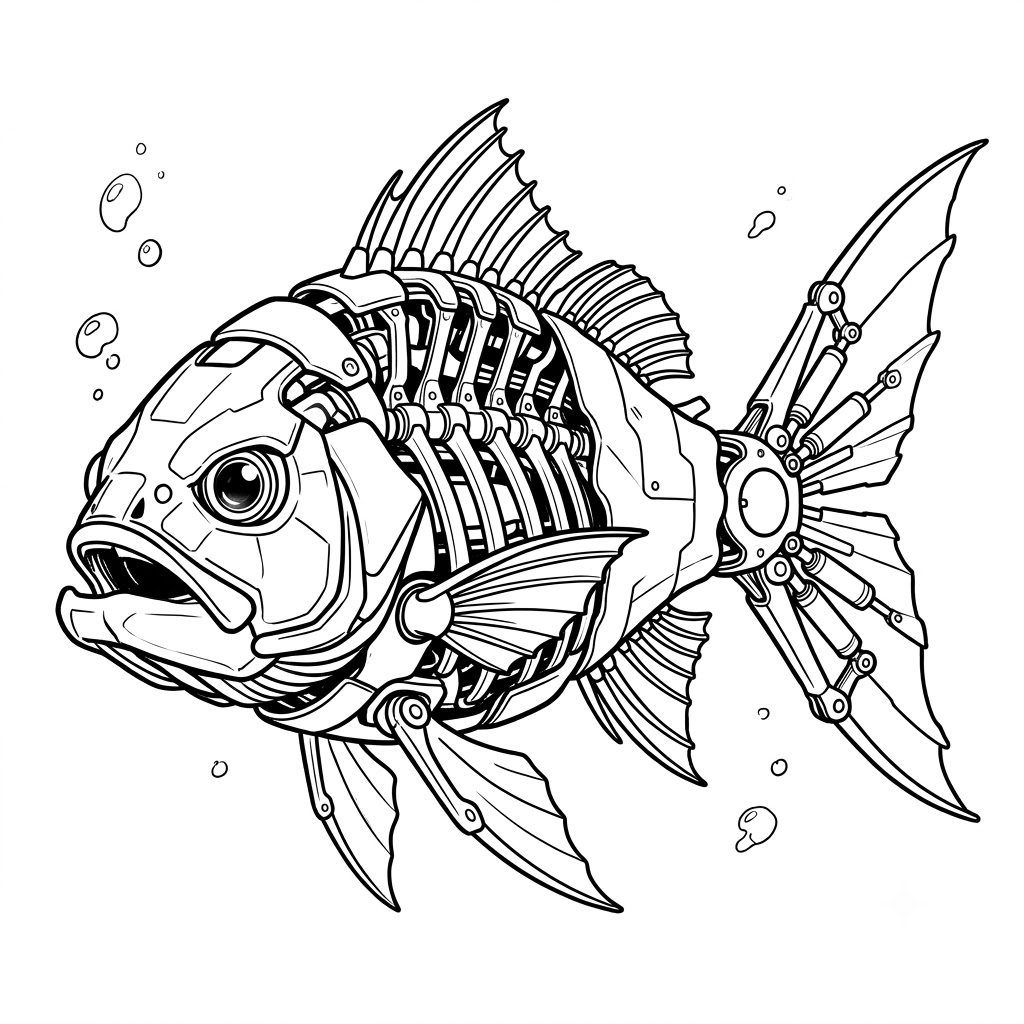
    All I’ve typed about so far is the scariness and danger of possibilities in the future with this kind of technology, but as it is with all tech, it has both sides. It might be able to do good too. What if AI and autonomous physical robots can become what Ishmael the gorilla calls “Leavers”? Could they become active autonomous beings that will support and maybe enhance the physical environment outside of what humans think? Live in harmony with plants and animals? (also Humans, we are animals too you realize..) What if we can make fish-shaped autonomous research robots to better understand the environment of certain species? Or autonomous nanobots that can travel your bloodstream and keep tabs on your health? The tech might be there in the future!

    Or maybe the fish will find these too uncanny as well

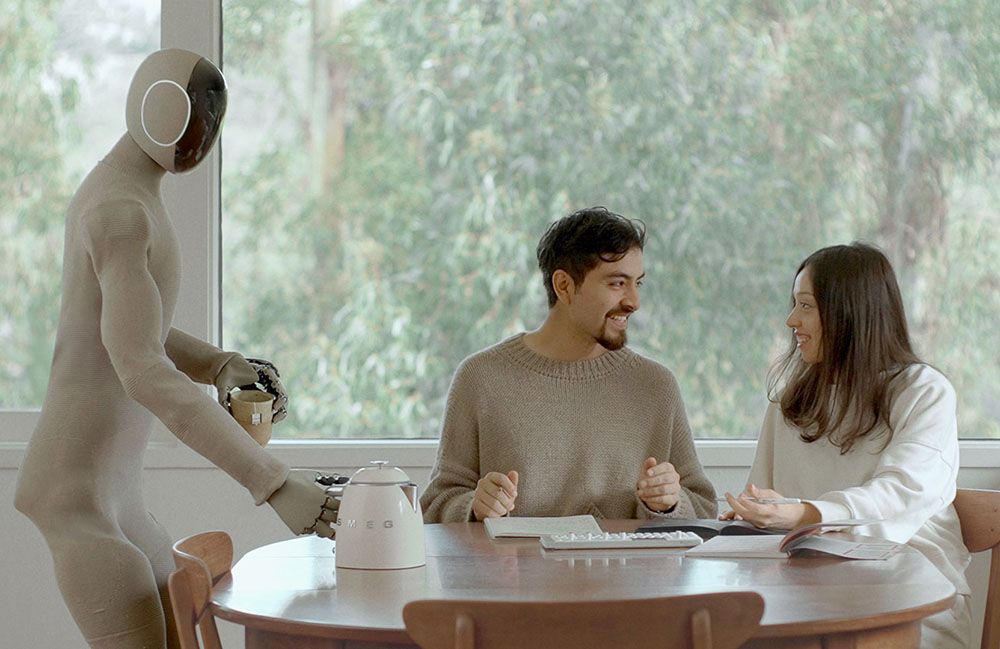
    What I’m trying to say is that to get to the better part of that future, I think we should leave the “taker” mentality behind and think a bit more on how we can “add” to the external world, not just the world that we perceive from our human perspective. I think the disk shaped autonomous vacuum cleaners we have now are fine for example. I don’t think I need a human shaped “Butler” in my house that can do “everything” for me. Just give me a diverse specialized “ecosystem” of autonomous robots doing a specific task like folding laundry, or mopping the floor.

    I’d rather “live in harmony” with multiple purpose built robots, than in the uncanny valley of the X – robot – butlers that might turn into a t-800. Then use the money you’ve earned on those mass scale production robots to design robots to actually improve the world at large, not just the human world, or even smaller, just my house?

    Yes it looks cool, I admit. But are humans really the best shape to do everything? And why is he only improving my (rich) home?

    If it turns out that we indeed want autonomous robots in the home and that I am in the minority, I’d pose this final argument. If because of mass-production reasons or something the robots all need to be one shape, don’t make it a human one. Make it the best one that evolution already decided upon multiple times over the course of history.

    Give me a giant crab-butler to fold my laundry basically. At least the robotic revolution wont be so human-centric.

  • Truth Shapers

    Lately I’ve had a lot of feelings when I’ve tried to search things on the internet. Google’s hegemony has steadily been growing since 1998 when it was introduced but with the rise of AI it seems that the whole model of navigating the internet has been upended. 

    I’ve tried to use other search engines to get rid of the still very much error prone LLM’s feeding me the information I’m supposed to be looking for. DuckDuckGo has lately been my go to search engine, but I can’t seem to shake the feeling that I’m not finding what I am genuinely looking for anymore. Most found sites and sources seem iffy at best, and it seems there are even AI-generated websites out there flooding the already muddled waters.

    It got me thinking on how I engage with information and how I look for information as well. Most of my interactions with the internet are through the big tech companies, who in my opinion have become “Truth Shapers”. When there are a few companies (and/or billionaires who own most of the media) who decide what information you get, when and what information you don’t get, objective information is under threat. What are the blind spots in the data of those LLM’s? It has been trained on the internet, but a lot of stuff that is relevant in the real world has never been on the internet, so it’s also not in an LLM. If it’s not in the data set, “it doesn’t exist”. I think that’s the wrong way around! The internet / social media seems to want to “shape the truth” by being the main way (or filter) of how we interact with the world.

    Since i am a millennial, I’ve grown up “with” the internet and the rise of (smart)phones in everybody’s pockets. I come from an age where the internet was still very young and underdeveloped (we did not have apps for example in the beginning). I remember the internet being a wild place where you could find a lot of niche information you would not have found otherwise. A lot of information also just was not on the internet. Often times i’ve needed (old) books to get information to get through my schoolwork.


    With the rise of Google and its search engine, along with social media there came a need to “filter” the information to cater to you as a user, so you could more effectively find what you wanted. This has not been a deliberate “evil” (not at first at least, at that time Google still had the “don’t be evil” moniker so it seems they at least would know the impact of them deciding things) choice at first, since it genuinely made the service better. Social media also needed a way to filter the most relevant people and/or information for you (I also remember social media being just that, social media, and not a “news” source) so they also took part in this filtering. This came to be known as the “filter bubble”. If you’re interested in that, take a gander at: (VIDEO). I can’t believe this video is 15 years old already.

    This made Google one of the first big truth shapers (with Meta joining them promptly later in the early years of 20XX). They “decided” what you saw online more and more. Although the internet is a relatively new technology, the practice of truth shaping has not been new. 

    When Johannes Gutenberg’s printing press got invented the concept of the then “objective truth” also got fractured and radically altered power dynamics and changed who had a say on what “the truth” was. Objective reality was no longer a monopoly of the church. This introduction also had other effects, it greatly quickened the spread of knowledge, discoveries and literacy in Europe at the time. (source)

    Objective truth has always been a gray area. It’s messy to get to the bottom of things. To get as close as possible you need a multitude of different sources contradicting, correcting and refining each other. But that process seems to fade more and more with billionaire oligarchs and their algorithms catering strict filter bubbles and isolating groups of people online in thousands of subcultures. The bigger overarching “monoculture” has been fractured more than ever. I don’t believe this was the intention when all these technologies got introduced. I think it’s hard pressed (pun intended) to believe that the intention of the introduction of the printing press was the strengthening of the eventual protestant reformation for instance (see previous source). Just the same, I don’t believe it was the intention of a company like google to divide the internet in filter bubbles. I do believe that as time got on, other companies, such as google and other (private) actors with political ambitions saw the fertile ground for propaganda and social and cultural division to gain power and money that filter bubbles offer. I can’t prove it of course, but I believe the rise of right wing politics in Europe and the world is partly explainable by filter bubbles and targeted marketing (source). The internet became large and influential enough (along with other technologies and smartphones) for a company like Cambridge Analytica to inevitably come into existence. 

    Now we are in an age where the information streams are in the hands of a few companies and people (source) who don’t seem to necessarily care about objectivism. The “useful” filter bubble seems to be hijacked by business and politics. Tech companies and people who are after power are, or want to become the new truth shapers. Think of all the young people now getting their information from TikTok. Check out the drama surrounding the US takeover of TikTok and how they’ve changed the algorithm (source). At the risk of sounding old and grumpy again, I remember a time where i was not allowed to cite wikipedia as a source, because “everyone can add anything to that site, you should get your information from multiple books from the school library”. Oh how times have changed. 

    I used to hate when the teachers said these things. The same teacher for example also used to tell me that I should be able to calculate difficult things in my head because “you won’t always have a calculator in your pocket”… 

    But now there seems to be a grain of truth to their first statement. At least on using multiple sources to form your own opinion to at least try to get near to an objective truth. For this I have my father in law as inspiration. He subscribes to almost all the newspapers, so he can form his own opinion based on discrepancies or is at least able to read between the lines a bit better. This is of course still not enough. To get to an objective truth even better he needs to talk to people who subscribe to all the news websites maybe, or get their news from other sources. Otherwise he’s just created another analog filter bubble for himself, although it is a widespread one. Of course, there are also filter bubbles that are so far away from reality that maybe they should not be considered as objective truth anyway : drinking raw milk?

    The way out seems to be incredibly difficult as media, information and power consolidates in a slowly shrinking group of people. The first step in my opinion is to become more media savvy and to promote critical thinking and discourse between humans, especially when they seem to differ in opinions on the surface. I also think the internet needs to grow up to be a bit more scientific in how it works. In a world where you can post anything and everything as truth, how can we accurately bridge the gap between the digital “reality” and the “analog” real one? I don’t have a clear answer yet,  but I strongly believe that the pressures on excellent schooling and scientific advances by the powers that be are an indication that we need to look in that direction (source).

    Further reading:

    https://www.rand.org/pubs/papers/P8014.html

    https://www.openbookpublishers.com/books/10.11647/obp.0253

    https://school-education.ec.europa.eu/en/learn/courses/how-use-critical-thinking-enable-media-literacy

  • Irreversible choices

    Irreversible choices

    I’ve always been afraid of making irreversible choices. The main example I often use is the posting of a letter in a letterbox. The moment I need to let go of the letter I always dread things like “ Did I write the correct postal code?” or “ Is this the right letterbox, what if it doesn’t get there?”. 


    Recently, my wife and I have made another irreversible choice: becoming parents. This made me think even more about the process of making such big decisions, because it turns out that at least for me, keeping an objective overview of how that process went turned out to be quite difficult. This choice also turned out to be even more permanent than I thought. Biologically for women, pregnancy causes permanent physiological changes (heart size, brain structure, immune system) (source)

    For me, and I think for us, the (perceived) fear about being locked into a certain path or consequence is the main difficulty in these kinds of situations, and especially the bigger choices in life seem at first glance black or white (moving house, kids or no kids) but on closer inspection (or long periods of emotional stress and (over)thinking) even those choices are greyer than you would’ve thought before hand.
    For example for a true black and white choice: if you do choose to go for kids, you’ll most probably grieve at a certain point about a loss of flexibility and freedom. On the other hand if you choose to not have kids there will be a large period of life (for women a shorter and more intense period probably than men) where “it’s still a possibility” until it becomes irreversible. And even if you do make the choice to never have kids, you are likely to at least once mourn about that option being out of your life. This is already a bit “greyer” than true black and white.

    In my line of work I see a lot of young people in a very dynamic stage of their life. They face a lot of challenges and seemingly black and white choices in a lot of different life dimensions. “Should I break up with him?”, “Should I change my masters?”, “Should I shut out my parents?”. If the student is particularly unlucky these questions arise at the same time. Often during therapy we try to “grey out” these choices. We gather more info and untangle emotion from rationality and facts. Do you need to break up or do you need to have a difficult conversation about something else first? Why do you want to change the masters, are there additional or replaceable courses to fill in the gap you feel? Do you need to shut out your parents or are you practicing with boundaries? Will you be ok if the boundary really is “never again?” 


    What I find interesting in observing my own dilemma and the dilemmas of the students is that there seems to be three distinct “stages” around making a choice. 

    The “before” state

    The “during” state

    The “after” state

    The before state

    We all know how this state feels. You are gathering information while you are faced with a difficult choice. It can feel misty, murky and muddy to be in this stage. Especially since making a choice is a very subjective state to be in. Your own emotions on the subject play a very big role, but emotions can be fickle and change as well! 

    The during state

    This is an interesting state in my opinion. Just with the past, present and future, the present and the “now” is constantly slipping away from us in a rapid (irreversible!) pace. The moment of choice itself can feel like a very short period as well sometimes, but is probably more spread out about a certain period of time. This seems especially true for larger life choices where time, talking to others (removing a bit of subjectivity in the process) and multiple emotions (and nights of sleep) can bring more clarity as a choice approaches

    The after state

    This state can be a tricky one in my opinion. How often have I heard the phrase “ of course you chose that, it was obvious the entire time!” when I told other people about the fact that we were expecting a child. This is a false conclusion in my opinion, since the act of making that choice gave us extra information about that choice. The choice became more gray as well, since we became more scared of the future, but also felt a loss of pressure on our shoulders as we at least knew we were going in a certain path to the future.

    Also at work I see students making this “mistake”. After a sense of relief (or fear if it turned out to be the wrong choice) the students gaslight themselves by saying “I should’ve seen it earlier, I should have known”, whereas the act of choice itself gave the student the extra information to continue on in the process of choosing. The mind also makes you like your choice more after you make it (source)

    I personally think that the before and during state of decision making are secretly the same state, where the before state is just future you looking back on past you not having made the choice yet, since the choosing itself is also still a bit of information gathering. Humans like to think in black and white, whereas reality is a lot grayer and more fluid and interchangeable then we would like it to be. If we can accept that last fact and internalize it a bit more, it might make hard decisions a bit less daunting since you are allowed to take a bit of time on the choice. Even when the choice needs to be made quickly. Most choices are not as black and white as we think and definitely not as irreversible.

    Research also shows that irreversible decision-making actually leads to higher post-choice satisfaction than reversible choices. Once you’ve made one your mind tends to focus on the positives of that choice. (source)

    The main irreversible choices i’ve found so far are: Death, Biological aging of cells (not really a conscious one there, in a way you have no choice), Learning new skills (neural rewiring) (source), Having children, Severe physical trauma or Organ loss, Psychological trauma (early life especially).

    The other choices in life seem irreversible, but are often only practically irreversible, or to put it another way: Just too hard at the time to reverse. Examples of these are: divorce, emigration or quitting a job.

    To end, I’d like to elevate the irreversibility of learning new things or skills. It’s not completely irreversible of course, it can happen through mental sickness (dementia for example, but even then sometimes skills and knowledge can resurface in the right environments). But my interest is again in the past and future state of knowledge. There is a time you did not know something, and then “suddenly” you do. It is my strong suspicion that this is also too much of a black and white view (of mine). Learning and “getting” things is a gradual and gray process that I’ve seen happen too often in my old work of after school teaching. Especially bigger complex subjects take time, effort, emotion and rationality to fully grasp, just as making choices. Weirdly enough most people quickly dismiss this process after they’ve “gotten it”. As if it’s black and white again. I think humans should be more emphatic to the gray gradual process of learning, not knowing (yet) and (slower) decision making.

    Let me know if you’ve achieved this.

    Leave a comment