
Robotics have always fascinated me. Ever since I saw the Boston dynamics “dog” robots, the terminator movie, power rangers combining into vol-tron or the transformer movies, robots held a forever “cool” factor for me.
Since the dawn of AI, robots have had a resurgence in the public view. This year Sony developed “ACE” for example. A new kind of “physical AI” (or Robot?) that could consistently beat humans at ping pong. (check it out here!). The big “new” thing of this event is the flexible, AI powered “autonomous” part. The robot uses AI to “think” (or react to the world autonomously) for itself to beat the other player. This is different from”older” robots, who were consistently designed to do certain objectives or movements very precisely under certain met conditions.
With the coming of AI, Robots have become able to “improvise” on different situations from their original intended design objective. They can actively learn from observation, and are getting better over time.
These abilities make some of the more doomsaying humans think our AI overlords will eventually develop a T-800 to conquer the world. Other AI doomsayers are maybe a bit more realistic by arguing that for example a rogue AI will execute their prime directive of ” improve the climate of earth”, a bit too well and alter micro climates so much that humans will be collateral damage.
Or maybe AI will go the “skynet route! But if that happens, I don’t think they will be “T-800 (or human) shaped”.
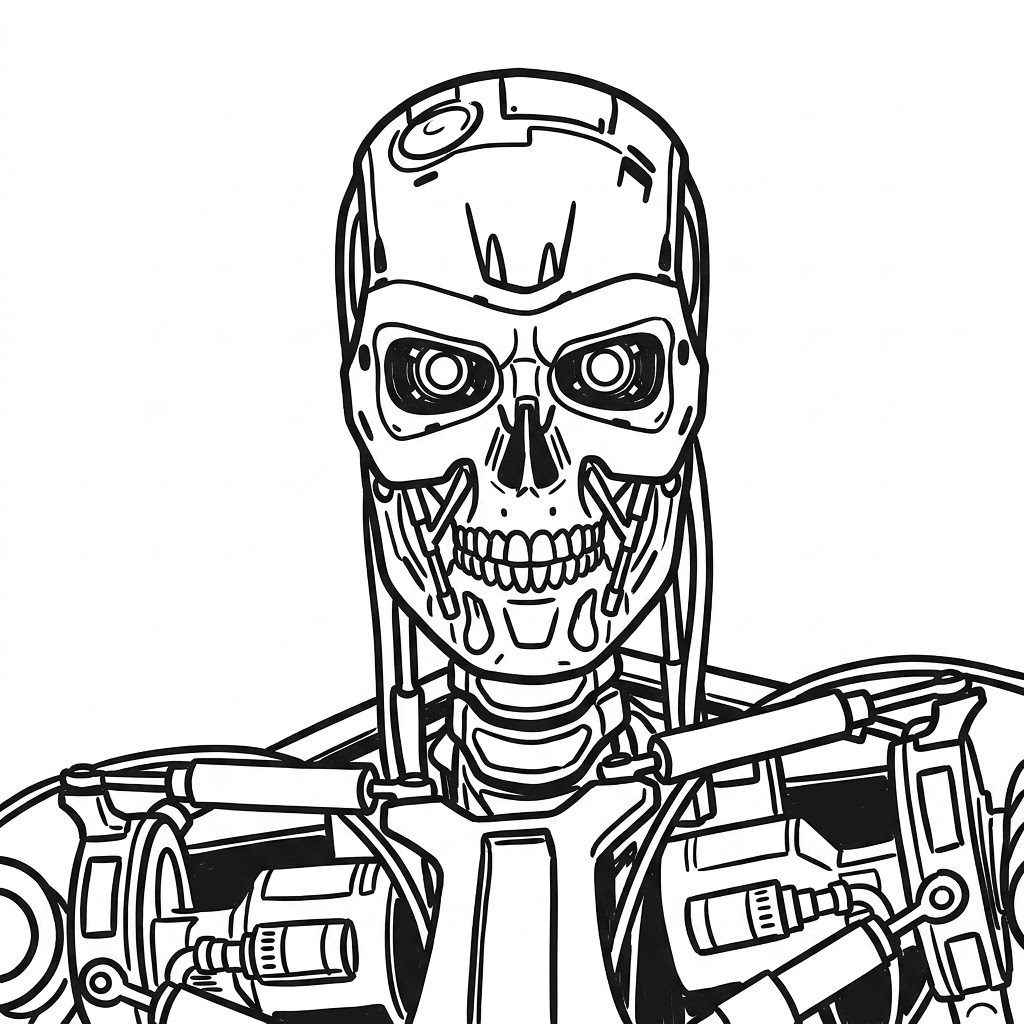
This “physical AI robot”, while scary, is a bit too “human” shaped for me. (this is on purpose of course, to activate the uncanny valley)
I also think that the terminator movies, and our fear of a robotic overlord future is way too human-centric as an idea. Why would a robot choose a human form if you can just poison the fresh water supply shaped like a server box in a data center somewhere?
This way of thinking started for me when I read two books last year. the first book was “An Immense World” by Ed Yong.
.
We encounter beetles that are drawn to fires, turtles that can track the Earth’s magnetic fields, fish that fill rivers with electrical messages, and humans that wield sonar like bats. We discover that a crocodile’s scaly face is as sensitive as a lover’s fingertips, that the eyes of a giant squid evolved to see sparkling whales, that plants thrum with the inaudible songs of courting bugs, and that even simple scallops have complex vision. We learn what bees see in flowers, what songbirds hear in their tunes, and what dogs smell on the street. We listen to stories of pivotal discoveries in the field, while looking ahead at the many mysteries which lie unsolved.
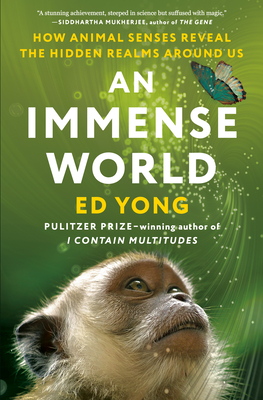
In this book it is made clear (in a beautiful way of writing I might add, please go buy it) that the world we experience through our human senses is just a tiny sliver of the wealth of subjective experiences that exist outside of our species. It made me think that if true General AI “experience” will exist at all, it won’t view the world “as we do”. it will have it’s own “filter” of reality and for example will probably be able to “see” or “experience” a way broader spectrum of light than humans ever will be able to.
The second book “Ishmael” by Daniel Quinn had a more story based philosophical approach to get me to the idea that humans are too entrenched in the “specialness” of humans, and the idea that the reality of the world adheres to only what humans think of it. We are too entrenched in thinking of ourselves as the center of the universe.
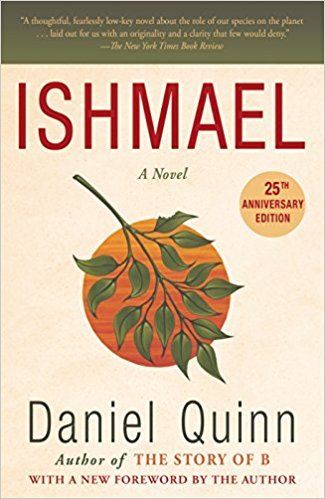
The narrator of this extraordinary tale is a man in search for truth. He answers an ad in a local newspaper from a teacher looking for serious pupils, only to find himself alone in an abandoned office with a full-grown gorilla who is nibbling delicately on a slender branch. “You are the teacher?” he asks incredulously. “I am the teacher,” the gorilla replies. Ishmael is a creature of immense wisdom and he has a story to tell, one that no other human being has ever heard. It is a story that extends backward and forward over the lifespan of the earth from the birth of time to a future where there is still time save. Like all great teachers, Ishmael refuses to make the lesson easy; he demands the final illumination to come from within ourselves. Is it man’s destiny to rule the world? Or is it a higher destiny possible for him– one more wonderful than he has ever imagined?
In the book the Gorilla Ishmael divides humans into Takers and Leavers
The Leavers: Indigenous, tribal, and hunter-gatherer societies. Leavers believe that humans belong to the world, just like any other species, and they live in balance with the natural environment.
The Takers: Members of modern, “civilized” societies (dating back to the Agricultural Revolution). Takers believe the world belongs to humans and was made for them to conquer and rule.
The Takers are the main group of humans alive on the world at the moment. Nature is something to be conquered by intelligence (human intelligence). This Idea is also seen in the AI – Skynet revolution of the terminator movies. The first thing the AI does, is “conquer” the world. They are the new intelligence, and they should therefore “dominate” and not live in harmony.
Interesting ideas I thought, but to circle back to the beginning, it also got me thinking on the arrogance of giving the t-800 a human shape. I think the Boston dynamics dog we mentioned before is a bit more scary than a T-800 when you strap a flamethrower to its back, because of the inhumanity of it and the way more flexible and quick way it can move about. Especially when you make these robots autonomous!
I think that’s also what makes the new kind of warfare with autonomous drones so scary. Not necessarily the destructive power, but the “inhumanity” of the fact that a tiny flying, super fast device can decide for itself to blow something up, and maybe you with it. Lets hope they don’t have the same hallucination – error percentages as the average large language model.
All I’ve typed about so far is the scariness and danger of possibilities in the future with this kind of technology, but as it is with all tech, it has both sides. It might be able to do good too. What if AI and autonomous physical robots can become what Ishmael the gorilla calls “Leavers”? Could they become active autonomous beings that will support and maybe enhance the physical environment outside of what humans think? Live in harmony with plants and animals? (also Humans, we are animals too you realize..) What if we can make fish-shaped autonomous research robots to better understand the environment of certain species? Or autonomous nanobots that can travel your bloodstream and keep tabs on your health? The tech might be there in the future!
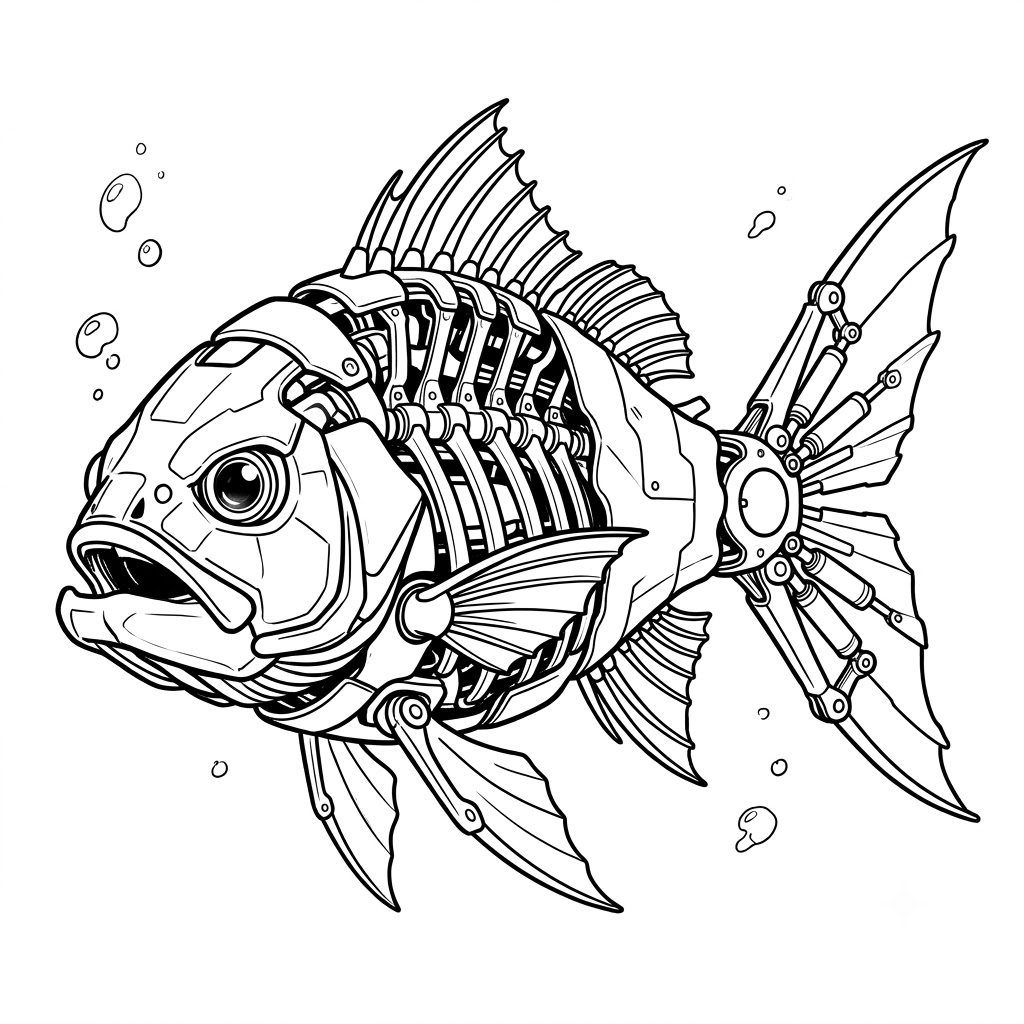
Or maybe the fish will find these too uncanny as well
What I’m trying to say is that to get to the better part of that future, I think we should leave the “taker” mentality behind and think a bit more on how we can “add” to the external world, not just the world that we perceive from our human perspective. I think the disk shaped autonomous vacuum cleaners we have now are fine for example. I don’t think I need a human shaped “Butler” in my house that can do “everything” for me. Just give me a diverse specialized “ecosystem” of autonomous robots doing a specific task like folding laundry, or mopping the floor.
I’d rather “live in harmony” with multiple purpose built robots, than in the uncanny valley of the X – robot – butlers that might turn into a t-800. Then use the money you’ve earned on those mass scale production robots to design robots to actually improve the world at large, not just the human world, or even smaller, just my house?
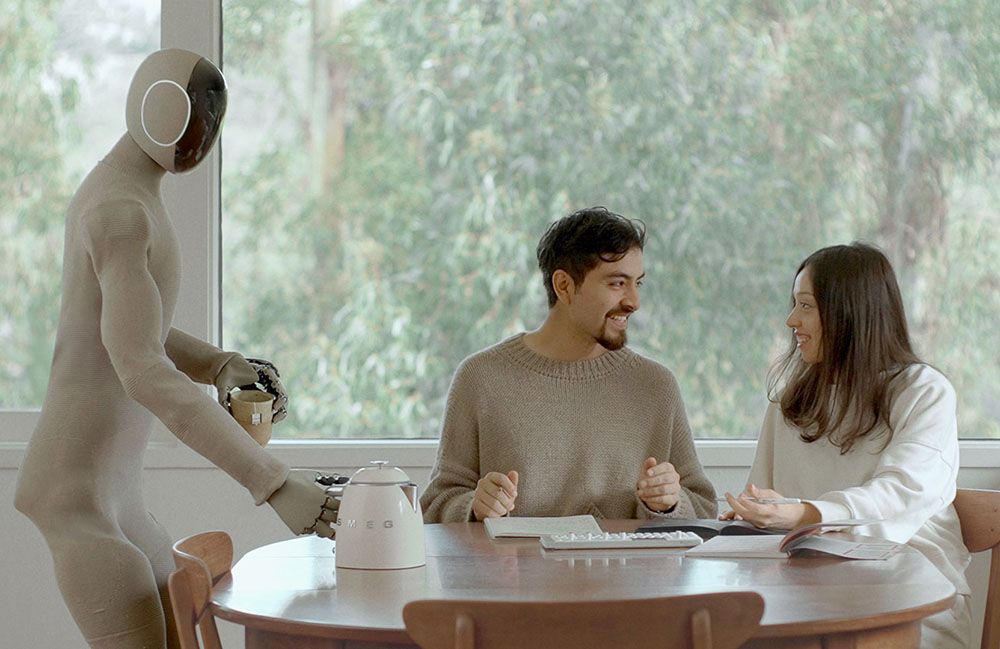
Yes it looks cool, I admit. But are humans really the best shape to do everything? And why is he only improving my (rich) home?
If it turns out that we indeed want autonomous robots in the home and that I am in the minority, I’d pose this final argument. If because of mass-production reasons or something the robots all need to be one shape, don’t make it a human one. Make it the best one that evolution already decided upon multiple times over the course of history.
Give me a giant crab-butler to fold my laundry basically. At least the robotic revolution wont be so human-centric.


 Artydetails